Build your first 100-investor outreach list in one afternoon
Here is a list we see all the time. It starts with a16z, Sequoia, Benchmark and Founders Fund. Then it gets padded with every fund that ever touched the founder's sector. It ends at about 240 names, and almost nobody on it is going to write this founder a check.
We are not judging. Most first lists look like that, including some we have built ourselves. The famous names are the ones you know, so they go on first.
This guide is how to replace that list with about 100 investors you can actually write to, in one afternoon. It is also about why you should not email all 100 at once.
What our outreach data says about lists
Since April 16, 2026, founders on VC Boom have sent 1,962 emails to investors. Fifty got a reply. That is 2.5%.
When we split founders by how many emails they sent in total, the picture changed.
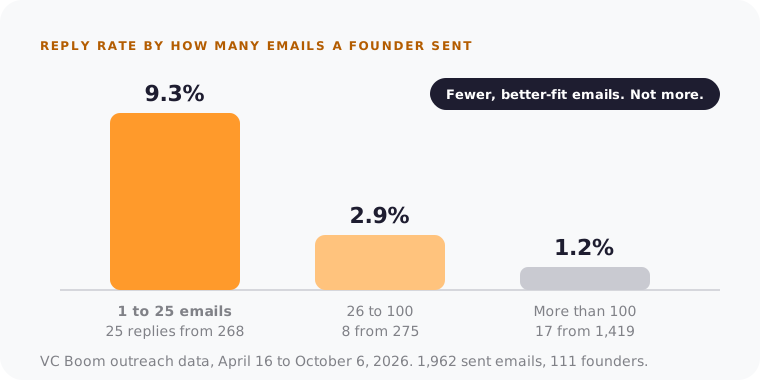
Founders who sent 25 emails or fewer got replies to 9.3% of them. Founders who sent more than 100 got 1.2%.
Read that carefully. It is an association, not a law. Founders with a strong company and an obvious fit may simply need fewer emails. But it is hard to look at those three bars and believe that cold outreach is a volume game. The founders with the best reply rate wrote to short, specific lists.
So the goal of this afternoon is not "100 names". It is 100 names ranked well enough that the first 25 are your best shot.
The five filters, in order
Order matters, because each filter is cheaper to apply than the next one. Stage takes seconds. Finding the right partner takes minutes. Do the cheap cuts first.
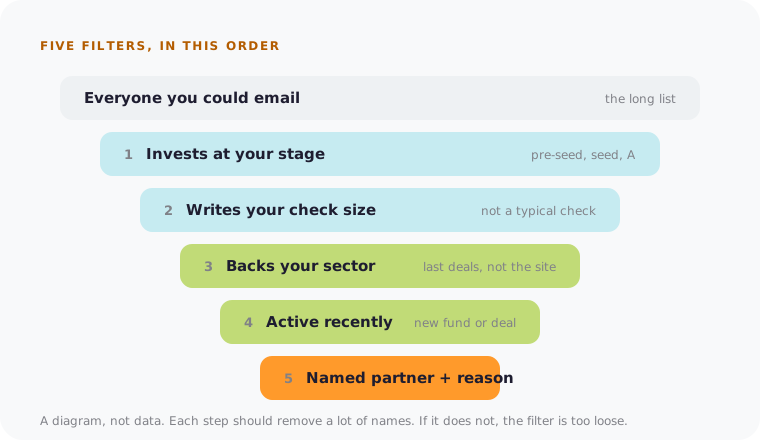
A diagram, not data. If a filter does not remove a lot of names, it is too loose.
1. Stage
A fund that leads Series A rounds will not lead your pre-seed, however much they like you. Most funds say their stage on their website. Believe the deals more than the words: if the last ten investments were all Series A, the fund is a Series A fund, whatever the homepage says.
2. Check size
This is the filter founders skip, and it is the one that quietly kills replies. If you are raising $1.5M, a fund whose normal first check is $5M is not going to "make an exception". Look for funds whose typical check fits inside your round, ideally as a lead.
3. Sector
Funds describe their thesis broadly ("software", "deep tech", "consumer"). Their deals are narrower. Open the portfolio page and read the last ten companies. If none of them look like you, the fund is not your fund, even if your sector is in the tagline.
4. Recent activity
A fund can match on stage, check and sector and still not be writing checks. It might be at the end of its fund, raising the next one, or quietly winding down. You want investors who are deploying now.
The cleanest public signal we know for US funds is the SEC Form D. When a venture fund raises money from its own investors, it usually files one. We match investor records to those filings, and here is what came back.
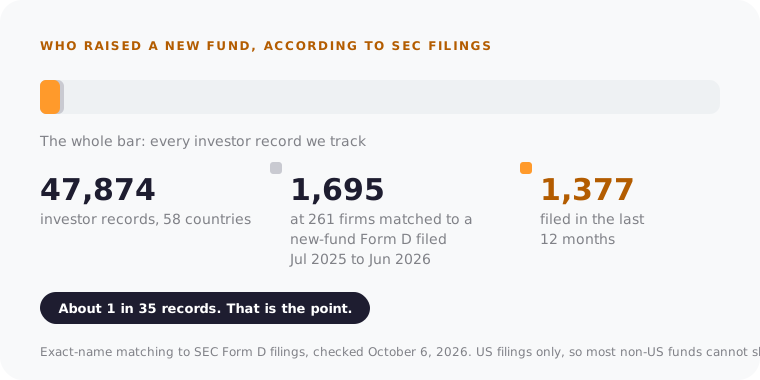
1,377 of the 47,874 investor records we track were matched to a new-fund Form D filed in the last 12 months.
That is about one record in 35. It does not mean the other 34 are inactive. Angels and most non-US funds never file a Form D, and our matching is exact-name, so it misses some. But a fresh fund is a strong reason to move someone up your list. For everyone else, look for a deal announced in the last six months.
5. A named partner and a real reason
The last filter is the one that takes time. For each firm that survives, find the partner who backs companies like yours, usually the name on a recent deal in your sector. Then write one sentence on why this person should care.
If you cannot write that sentence, the firm does not go in your first batch. It might go in a later one, after you learn more.
The afternoon, hour by hour
Hour 1: write your filters down
Open a blank spreadsheet. Before you add a single investor, write this at the top:
Stage:         seed
Round:         $1.5M
Lead check:    $400K to $1M
Sectors:       logistics software, then supply chain, then B2B SaaS
Geography:     Europe first, US second
Active:        new fund or a deal in the last 6 months
Those values are an example. Use yours. The point is to write them before you start, because otherwise you will "just add" funds that do not fit, and the list bloats back to 240.
Hour 2: pull candidates
You can do this by hand from portfolio pages, public databases and your own network. It is slow but free. Or you can use a tool that does the stage, sector and check filters for you. VC Boom does that from your deck: it reads what you are building and ranks investors from the 47,874 records we track. Either way, aim for 200 to 300 candidates. You will cut most of them.
Hour 3: cut to about 100
Go down the list and kill anything that fails a filter. Be strict. If a fund has done three biotech deals in a row and you are building consumer software, it goes, even if "consumer" is on their website.
Hour 4: rank into three tiers
- Tier 1, about 25: every filter passes, you know the partner, and you can write the reason in one sentence.
- Tier 2, about 50: strong fit, but the reason is thinner or the activity signal is older.
- Tier 3, about 25: plausible. Hold these for later.
The columns that keep you honest
Use a table, not a doc. These are the columns we would use:
Firm | Partner | Email | Verified? | Stage | Typical check | Last relevant deal | Fund raised (date) | Tier | Reason | Status
Two columns do most of the work. Last relevant deal is what you mention in the email. Reason is the sentence that makes the email specific. If both are empty, do not email that firm yet.
The Verified? column matters too. In our data, emails to verified addresses got a 2.7% reply rate and emails to catch-all addresses got 1.7%. A catch-all domain accepts anything, so you cannot be sure a person is behind it. If you build addresses by hand, our guide on finding a partner's real email covers how to check them.
A mistake we made with our own list advice
Our earlier version of this guide said "send 25 on Monday, follow up on Thursday, send 25 more next Monday", as if the list were a conveyor belt. Looking at the data again, we would change the emphasis. The point of sending 25 at a time is not speed. It is learning.
After your first 25, look at what came back, including the silences. Did the funds that replied share something: a sector, a check size, a fresh fund? Did the silent ones? Use that to reorder Tier 2 before you send it. A list you adjust after each batch beats a list you blast.
What to do this week
- Block one afternoon. Four hours, phone off.
- Write your filters first. Stage, round, lead check, sectors in order, geography, activity.
- Cut hard. Aim for about 100 from 200 to 300 candidates.
- Check activity. A recent fund or a deal in the last six months. Move fresh funds up.
- Fill the Reason column for Tier 1. One sentence each. No sentence, no email.
- Verify every address in Tier 1. Drop or replace catch-alls where you can.
- Send Tier 1 only. Then read the replies and silences before touching Tier 2.
Once the list is right, the email gets much easier. Our cold email guide has the shape that worked in the replies we read, and our follow-up guide covers what to send when nobody answers.
If you want a head start
Upload your deck and VC Boom ranks investors who fund your stage, sector and check size, from the 47,874 we track, best fit first. We check SEC filings and firm portfolio pages for activity, and show the date we checked. You still own the Reason column. That part should be yours.