Hitting #1 on Product Hunt: the VC Boom launch playbook
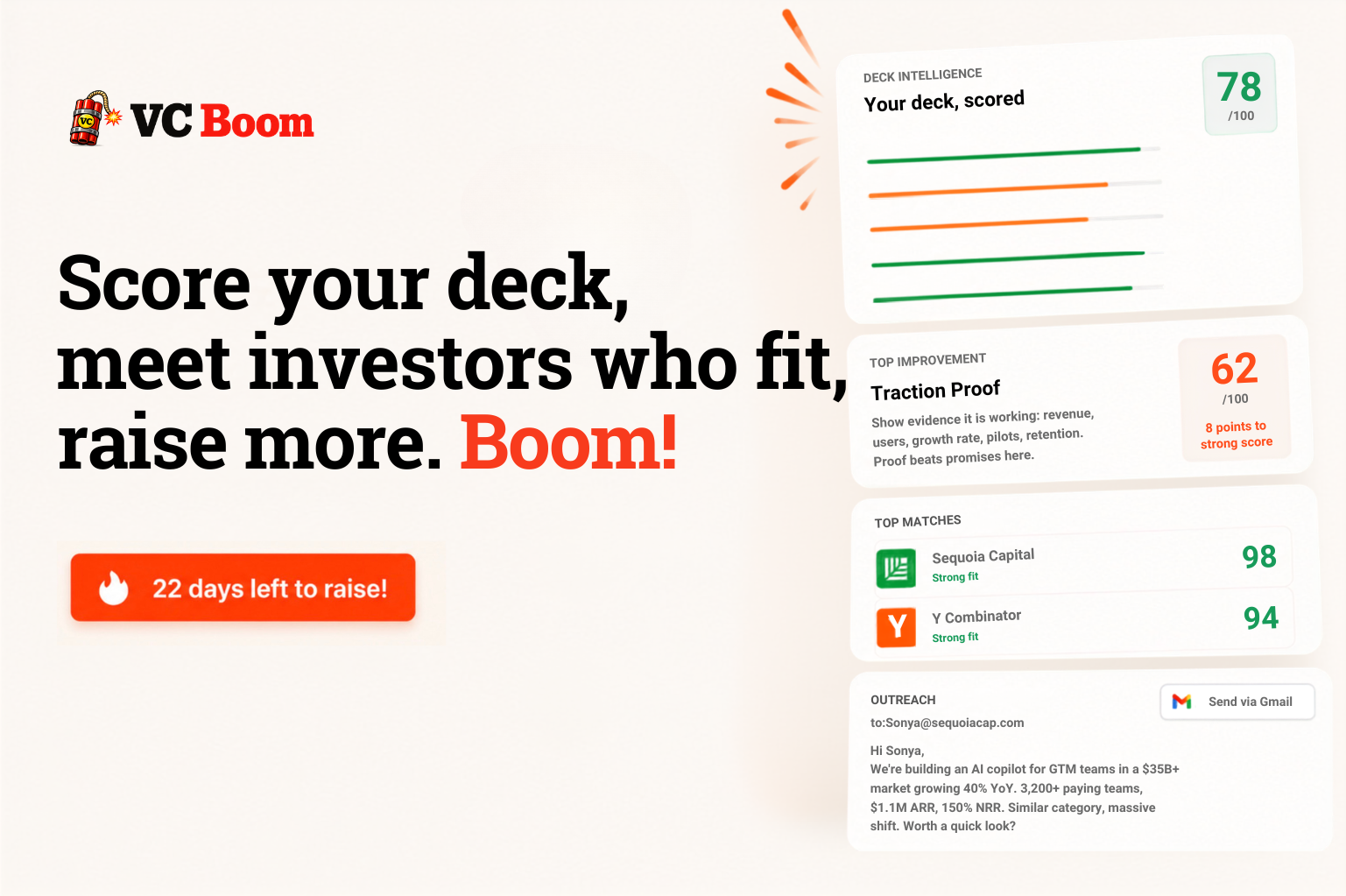
Yesterday we shipped VC Boom on Product Hunt and finished the day at #1 Product of the Day, with a stream of founders who'd never heard of us 24 hours earlier walking into the funnel.
This is the post we wish we'd had four weeks ago. The honest version. What we did, what we got wrong, and the playbook a serious B2B founder can actually run.
We borrowed a lot of the operating frame from Lenny Rachitsky's How to successfully launch on Product Hunt. If you have not read it yet, do that first. The point of this post is the part Lenny does not cover: what happens when the product is in a niche (fundraising tools for startup founders), the audience is not Twitter-native, and the team is small.
Why we launched at all
A Product Hunt #1 will not by itself make a B2B SaaS company. We knew that going in. The reason we shipped anyway was simpler. We had three things we wanted out of a launch day:
- A forcing function to finish the long tail of polish (favicons, error boundaries, the social share image, the chunks of pricing-page copy that nobody had written).
- A surface to point at later ("the team that hit #1 on PH"), specifically for press, partnership outreach, and the next round of investor conversations on our side of the table.
- A real test of the funnel under pressure. Up to launch day the funnel had been a slow drip of organic traffic. We wanted to see what 3 hours of concentrated attention did to scoring time, deck-upload errors, and the email queue.
If you cannot answer at least one of those questions with a yes, do not launch.
The pre-launch month
We spent four weeks getting ready. Not because Product Hunt requires that much prep, but because the act of preparing for a launch is the thing that surfaces every half-finished corner of the product.
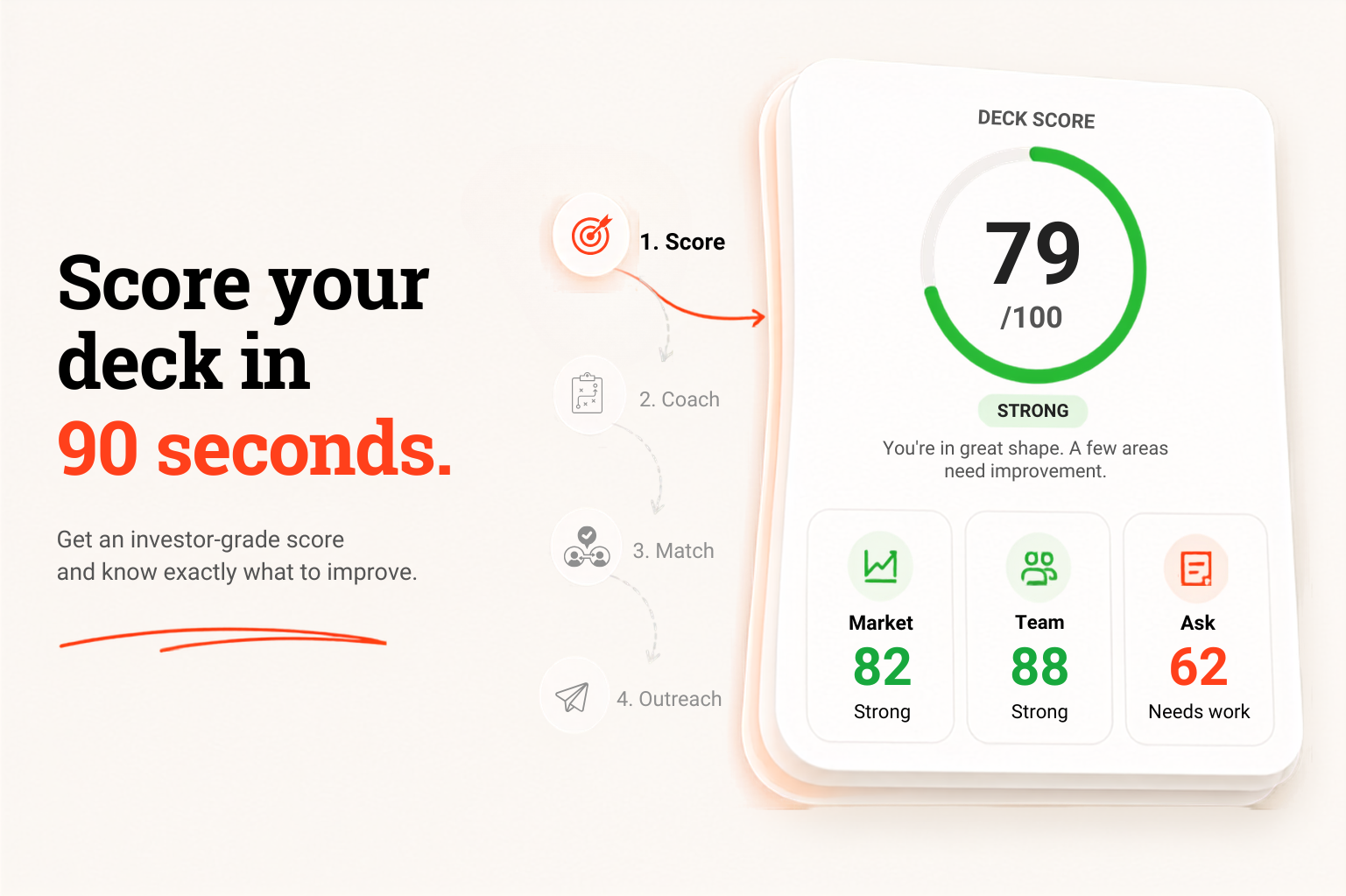
Week 4: choose the hunter, write the maker comment
If you are not a known maker on Product Hunt, the launch performs measurably worse than if you are hunted by someone with a following. We reached out to three potential hunters who had submitted products in adjacent categories (fundraising, founder tools, AI productivity). We asked them on Twitter DM, not LinkedIn. The DM was three sentences:
Quick ask. Building a tool that scores pitch decks against 47,000+ investors. Launching on PH in 4 weeks. Would you hunt? Will send the working demo and a draft maker comment so it is zero work for you.
Two said yes inside 24 hours. We went with the one whose followers most overlapped with our target audience (early-stage founders raising seed and Series A).
Week 3: build the asset pack
We rebuilt the hero image, the gallery, and the favicon to look like a launch, not a side project. A static social-share image (1200x630, hand-designed, no Satori-rendered junk) replaced the dynamic OG route. We hand-cropped 10 product screenshots for the PH gallery and made sure the first three told a complete story without any text on the page.
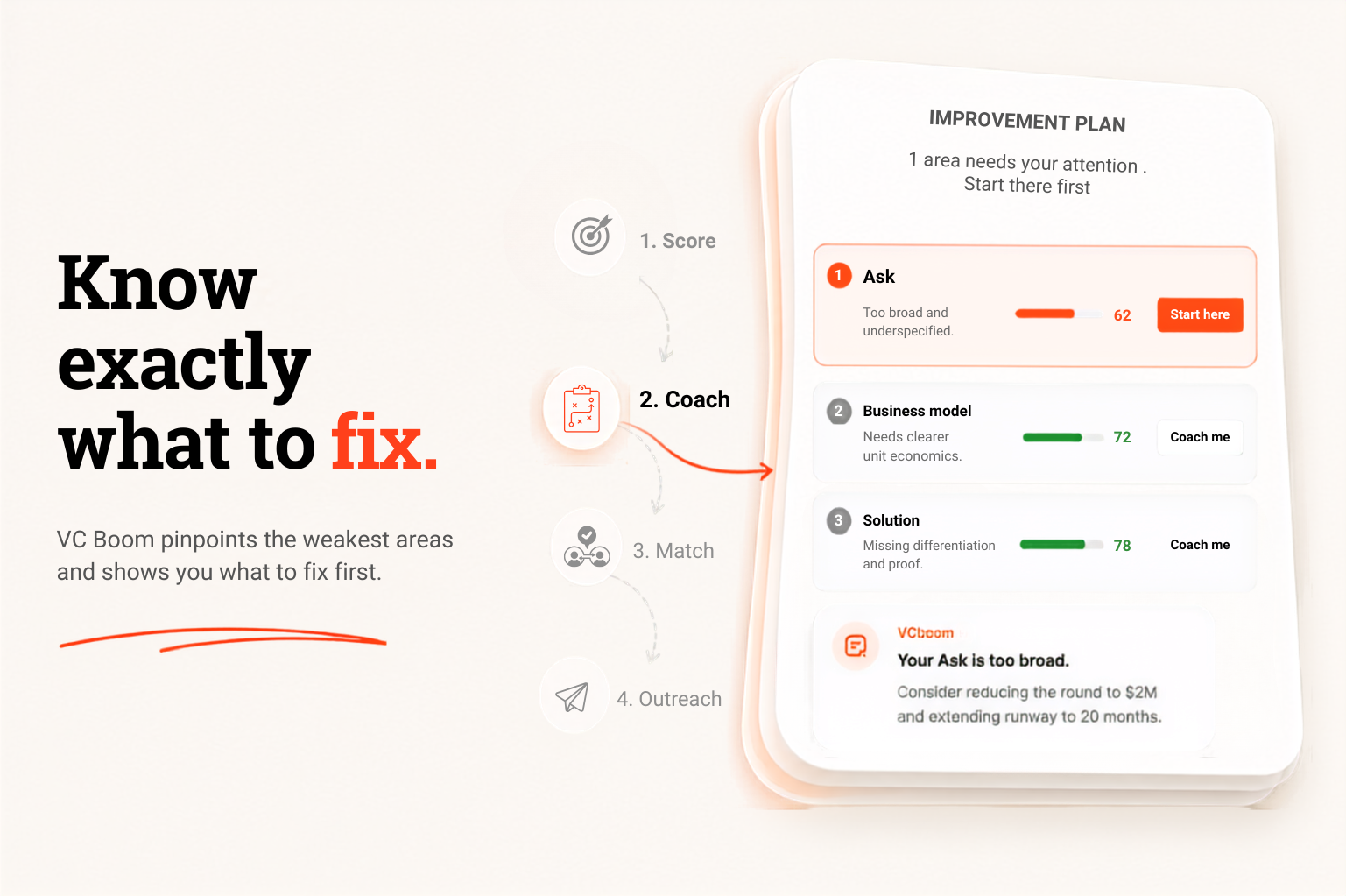
The most important asset, by some distance, was a short product video at the top of the gallery. If you can ship one, ship one. A real product video, even a 30-second screen recording, shows visitors the product working in a way a static gallery cannot.
Week 2: build the email list
We had two email channels: the existing customer list (founders who had signed up before launch day) and an opt-in waitlist we put live two weeks before launch.
The single sentence that made the waitlist work:
We are launching on Product Hunt on June 10. Drop your email if you want a 24-hour heads-up so you can upvote in the first hour, where it counts most.
It worked because it asked for exactly one thing and was specific about why it mattered.
Week 1: dry-run launch day
Three days before launch we ran a fake launch with the team. We picked a Tuesday morning, posted in our internal Slack as if the listing had gone live, and walked through every link, every comment we expected, every screenshot. Two things broke:
- The /vc page hydrated with a different number on browsers in non-English locales (a
.toLocaleString()issue without an explicit locale pin). We caught it before a single launch-day visitor saw it. - The Stripe checkout had a stale CLOSE20 promo code carrying over from a months-old cookie. We added a denylist so campaign codes never auto-apply.
Both bugs would have shown up in the worst possible way on launch day with a flood of new traffic. The dry-run saved us.
Launch day, hour by hour
We launched at 12:01 AM Pacific. The first 4 hours decide the day.
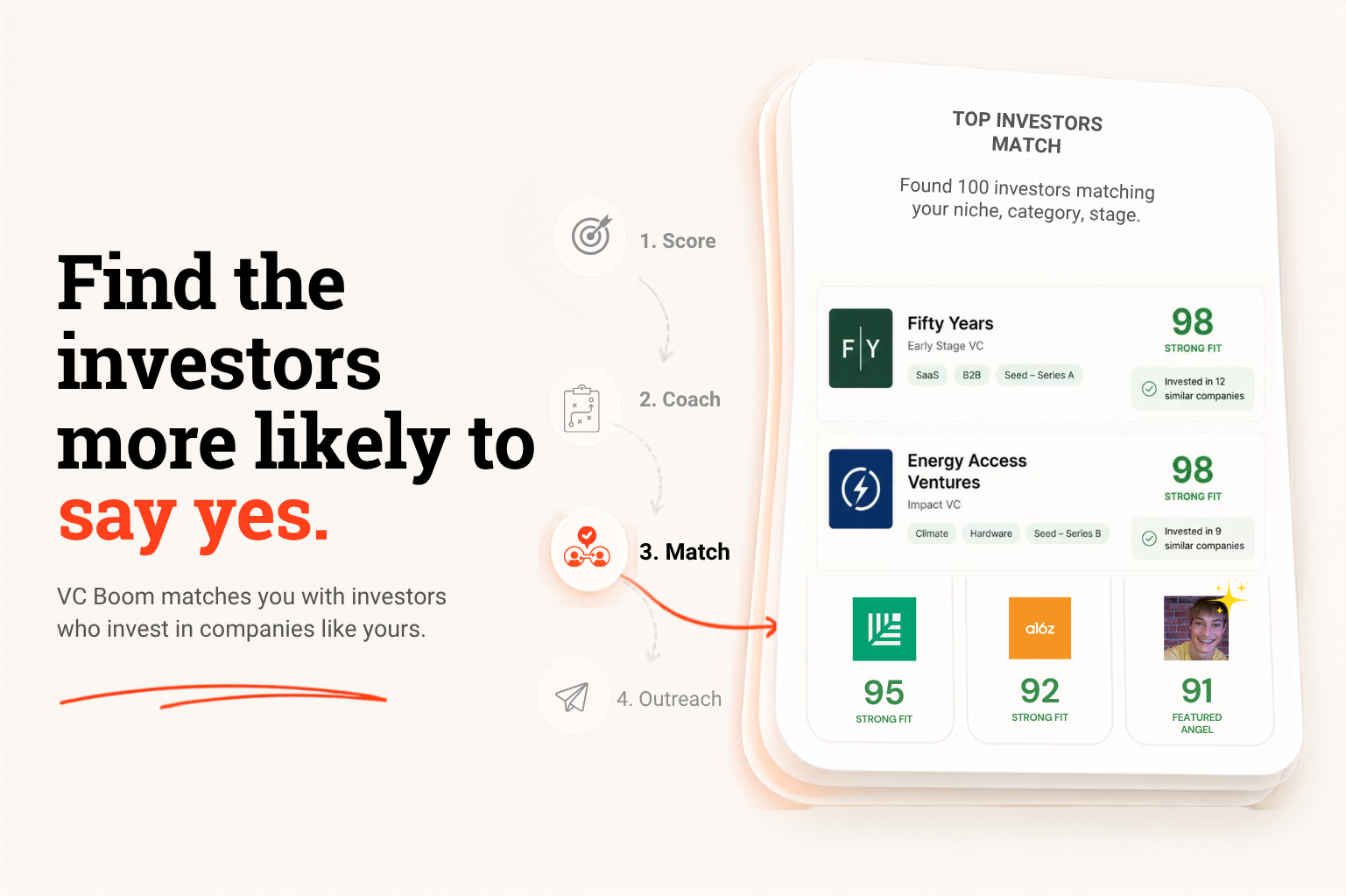
00:01 PT, post live. Our hunter pushed the submit button. Forty seconds later the URL was indexable. We posted the maker comment within two minutes (more on that below). The opening sentence of the maker comment matters more than any other sentence you write that day.
00:02 to 01:00 PT, the email + DM sprint. We had three pre-written batches:
- The waitlist email. Subject line:
We are live on Product Hunt right now.First line:One upvote, 10 seconds. Direct link below. - A batch of personal DMs on Twitter and LinkedIn. Each one specific to the recipient. None used the word "support."
- The existing customer list got the same email with a different first line, thanking them for being our earliest founders and asking them to leave a review (not an upvote, since reviews are a more durable signal than votes).
01:00 to 04:00 PT, the comment thread. We responded to every single comment inside 30 minutes. Every one. Two of us were on it through the night. The comments are where the Product Hunt algorithm reads engagement signal, and they are where new visitors read the room before deciding to upvote.
A pattern we noticed: founders did not come in saying nice things about the product. They came in with skeptical questions. ("Why is this different from Crunchbase?" "Where do the 47,000 investors come from?" "How accurate is the scoring really?") The right move was to answer them honestly, in detail, and link to the actual page that backed up the answer. Generic gratitude reads as defensive.
04:00 to 08:00 PT, the second wave. Asia woke up. We had pre-arranged a relay with founders in Singapore, Hong Kong, and Tokyo who had agreed to share the launch with their own networks at their local 9 AM. This was the single biggest-payoff move of the day. Every hour of the launch counts, and a timezone relay lets a small team keep momentum compounding for half a day without anyone going 24 hours without sleep.
08:00 PT onward, the maker comment update. We pinned an update at the top of the maker comment with the current vote count, two real customer quotes, and a thank-you. People read those updates. They also screenshot them and share them. Make them say something.
What surprised us
Five things we did not expect.
The traffic was good, the conversion was not. Product Hunt visitors are not buying-mode visitors. They are exploring. Treat launch day as top-of-funnel, not bottom-of-funnel. Our paid conversions on launch day were lower than a normal Tuesday. Our signups were sharply above a normal Tuesday. The right metric for this day is signups, not revenue.
The Asia relay was the single highest-ROI move. None of the launch posts we read prepared us for how much of the upvote total comes in between 6 AM and 12 PM Pacific (where Asia and Europe are awake but the US is mostly still asleep).
Existing customers brought the reviews. The reviews came from customers we knew personally, not from random launch-day traffic. Plan for this. If you do not have a handful of customers willing to review on the day, you will finish without reviews and the listing looks weaker than the vote total suggests.
The product had to actually work. Two days before launch we discovered the page was being blocked by AT&T Active Armor in the US and a residential ISP in Portugal because the domain was too new to be trusted. We spent the morning of launch day submitting to Norton SafeWeb, BitDefender, G-Data, McAfee, and three other URL reputation databases. If you are launching on a domain younger than 90 days, do this before launch week, not during it.
A real Product Hunt page is a Trojan horse for SEO. A submission that finishes near the top of the day tends to get picked up by PH roundups and listicles. The launch is over by lunchtime. The backlinks compound.
What we would do differently
The honest list, even though we hit #1.
- Start the waitlist 6 weeks out, not 2. We left launch-day upvotes on the table by not giving the heads-up list enough time to compound.
- Pre-write every personalized DM the day before, not the morning of. The ones we rushed were noticeably less specific, and the response rate showed it. Friends told us afterward they would have upvoted earlier if the message had been more pointed.
- Have a dedicated comment responder per timezone block. Two people for the whole launch window is not enough. Comments that came in during the team's sleep window sat unanswered for a few hours, and the engagement on those threads dropped visibly.
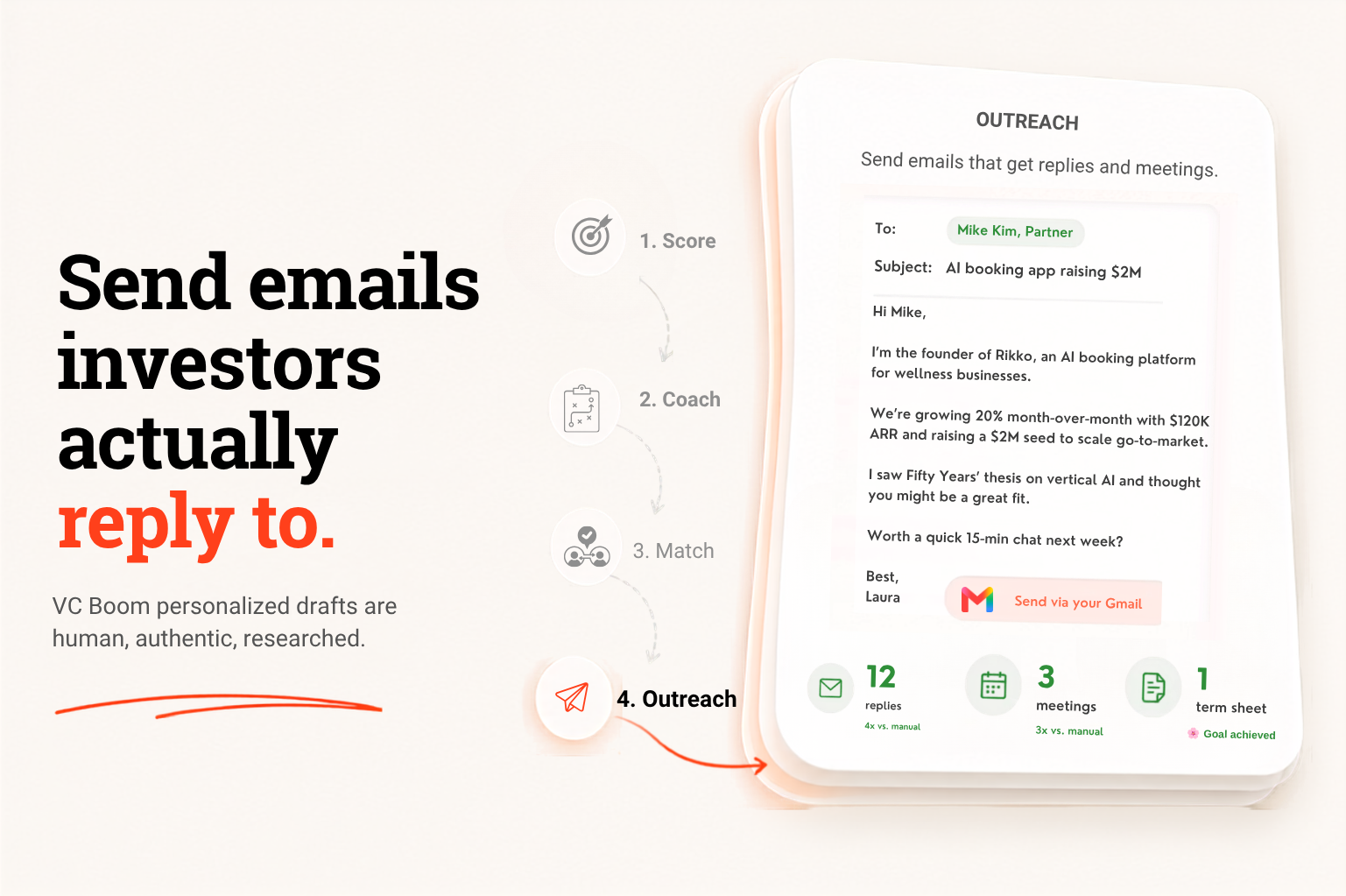
- Make the gallery story tighter. Ten screenshots is too many. The four-image flow (score, match, draft, raise) tells the same story in half the cognitive load. We will rebuild the gallery for the next launch.
If you are considering your own launch, start here
A 5-step opener for any founder reading this on a Tuesday afternoon thinking "we should do this":
- Pick a launch date 4 weeks out. Pick the day of the week that matches your target audience's working pattern. We picked Tuesday because the founders we serve are heads-down on weekdays and skim PH on Tuesday morning before standup.
- Get a hunter committed within the first week. Use Twitter DM, three sentences, demo + draft comment attached.
- Build the waitlist before you build the gallery. The waitlist is the launch. The gallery is the conversion.
- Run a dry-run launch the Friday before. Walk every link. Click every CTA. Stripe-test on the staging URL.
- Reserve launch day for comments and DMs only. Do not write code that day. Do not respond to support tickets. Do not check email outside of the launch thread. Comments and DMs are the whole job until the West Coast goes to bed.
A final note
A Product Hunt #1 is not a moat. It is a signal. The thing it signals is that you can mobilize a small audience to do a specific thing in a specific window, which is the exact skill you will need every time you do a round, every time you hire, and every time you ship.
If you are a founder raising right now, we built VC Boom to do for your raise what the launch day did for our visibility: turn a long slog into a sequenced, executable plan. Score your deck (90 seconds, free) and we will tell you exactly which 50 of the 47,000+ investors fit. Named founders on our Wall of Boom have raised $148M+. We would like to be part of yours.
The Claude Fundraiser team, now shipping as VC Boom.